

Renewable Energies to Become the most Competitive Sources of Electricity in 2040
In its "New Energy Outlook 2016" report, released on Monday, Bloomberg New Energy Finance (BNEF) expects renewable energies to go on developing quickly. They should become, in the 2020s, the cheapest sources of electricity in many countries, and nearly globally by 2030.La Tribune | 2016, June 14th
Swedish government revives nuclear power
The Swedish left-wing government and the opposition on 10 June signed a political agreement that defines the country' energy policy over the next three decades. Sweden aims to produce all of its power from renewable sources by 2040 but in the meantime will build nuclear plants to replace old ones being phased out, according to the deal. Les Echos | 2016, June 13th
India and US sign civil nuclear deal
On the visit of Indian Prime Minister Narendra Modi to the US, the two countries have reached an agreement on civil nuclear power, under which the US company Westinghouse will build 6 reactors in the Indian State of Andhra Pradesh, south-east of the country. Engineering studies are set to start and the final contract should be signed before June 2017. New Delhi has been engaged in a plan for the large-scale development of civil nuclear in order to cut its carbon emissions. Naturally, the world's nuclear sector players are highly interested, although projects in India take a lot of time to materialize.Le Monde | 2016, June 10th
Germany puts brakes on renewable energies
Six years before its total nuclear exit, the German government on June 9 approved a draft law that modifies the system of systematic subsidies granted to the renewables energies sector in order to slow the nation's massive build-out of wind, solar and biogas power installations. The goal is to limit costs of the energy transition. As of 2017, the government will issue tender calls each year for all sources of energy and the most economically-viable project will win. The government justifies the strategic shift by the fact that renewables are today a mature sector that no longer needs to be supported by public authorities. Environmentalists reply that such a policy also allows Germany to continue to support coal.Le Monde | 2016, June 10th
EU support will make offshore wind competitive, energy firms say
In an open letter, the bosses of 11 energy companies, including the renewables arms of General Electric, Siemens, RWE, Iberdrola, Statoil and Vattenfall, said offshore wind could be generating electricity as cheaply as fossil fuels within a decade, but only if policymakers across the EU take urgent steps to secure the growth of the sector. According to them, long-term support and stability in the market would enable the technology to become fully competitive. The pledge and the challenge to ministers are designed to reposition offshore wind as having a strong future in the EU. The European commission has tended to emphasise gas as the priority source of energy security.The Guardian | 2016, June 07th
Hinkley Point faces nuclear rival
The project by NuGen (the joint venture between Toshiba and France's Engie) to build a nuclear power station near Sellafield, in the UK, could begin generating electricity in 2025, a year earlier than the scheme proposed for Hinkley Point by EDF. NuGen plans to have 3 reactors up and running within 9 years. If it meets schedule, it could overtake EDF, which has repeatedly delayed the Hinkley Point project.The Times | 2016, May 19th
Cigeo project wins approval from French Senate
The French Senate on May 17 approved almost unanimously a draft law aiming to allow for the continuation of the Cigeo project in Bure (French Meuse department). The deep geological disposal facility for French nuclear radioactive wastes is supposed to bury at some 500 meters below ground the most radioactive wastes. Only 10 environmentalists voted against.Le Monde | 2016, May 19th
UK: 38 bidders for small nuclear plant project in Snowdonia
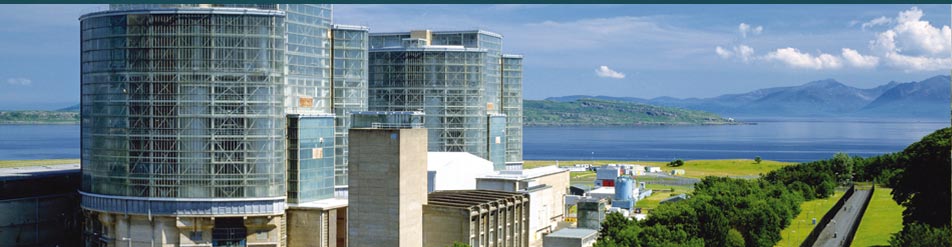
38 companies - understood to include US groups Westinghouse and Bechtel, CNNC of China, one Korean-led consortium, Rolls-Royce (as part of NuScale Power) - have submitted expressions of interest to participate in the competition to build and test small modular reactors (SMRs) in the site of the former nuclear power station in Snowdonia National Park, north Wales.The Times | 2016, May 19th
Germany criticizes European Nuclear Cooperation Programme
Ahead of a meeting of the European Union's energy commissioners, an EU strategy paper has leaked to the press and is understood to be the basis for the European Commission's future nuclear policy. It reportedly includes plans to support nuclear power, raising strong criticism in Germany. The German government expressed the wish to prevent such support. The EU played down the importance of the paper, saying it only reflects the current state of discussions. But German Economy Minister Sigmar Gabriel said the document "goes much further" by mentioning the cooperation in research, development, funding and the construction of innovative reactors.Frankfurter Allgemeine Zeitung, Handlesblatt | 2016, May 18th
E.ON warns on financial risks of nuclear phase-out
German utility E.ON said on May 11 that mounting costs related to nuclear-waste storage could hit financing and possibly trigger a capital increase. The company might need to pay as much as €10 billion, or roughly $11.4 billion, into a state fund to manage nuclear waste, E.ON CFO Michael Sen said during a conference call after the release of E.ON's first-quarter results. Investors badly reacted to the news. Shares in E.ON fell 5.6%, although the utility reported quarterly results that were in line with analysts' expectations. Frankfurter Allgemeine Zeitung, The Wall Street Journal | 2016, May 12th
French Energy Minister wishes to ban import of US shale gas
While the first shipments of US shale gas arrived in Europe (notably in Norway and Portugal) in the spring, French Energy Minister Segolene Royal wants to stop EDF and Engie from importing US shale gas. The minister said she will have this project "legally examined". She wants the two companies to turn to other markets and import only gas coming from conventional sources, she said. Les Echos | 2016, May 11th
E.ON, RWE and Vattenfall seek compensation for German nuclear phase-out
Germany's goal to increase the share of renewable energies in its electricity production mix to 80% in 2050 represents a radical shift that is forcing the three major utilities - E.ON, RWE and Vattenfall - to drop their nuclear power activities. Claiming that they are victims of the German energy transition and of a pure and simple expropriation of their atomic plants, they have filed proceedings with the Constitutional Court in Karlsruhe. The verdict is expected in several months. Should the judges rule in favour of the companies, the latters would receive billions of euros in damages. E.ON, RWE and Vattenfall already have provisioned €36 billion to fund the dismantling of stations and nuclear waste treatment. However, industry watchers are mainly awaiting the deliberations of a commission of experts that for the past five months has been trying to figure out how to divide up the costs of Germany's multibillion-euro atomic clean-up between the utilities and the state. The final proposals are expected mid-April. Le Figaro, Frankfurter Allgemeine Zeitung | 2016, March 16th
UK: experts call on government to look at smaller nuclear reactors
Amid growing uncertainties about the cost of building the major Hinkley Point nuclear stations, manufacturers and nuclear experts are calling on the British government to look at cheaper schemes, notably the smaller, proven nuclear reactors such as China's Three Gorges Dam hydroelectric project. British companies are also ready for a programme to build dozens of local atomic power stations. Small modular reactor technology has been around for decades. Rolls-Royce uses it in the Royal Navy's nuclear-powered submarines - but its application as a civil nuclear plant has not been developed.The Times | 2016, March 14th
Germany said to near consensus on nuclear waste
An internal European Commission working paper has revealed that Germany can only cover 83% of its energy transition; nuclear operators would be €8 billion short to fund the dismantling of reactors by 2050. Meanwhile, a Berlin-based cross-party commission working on the financing of the nuclear phase-out signalled it could be willing to have German taxpayers share some of the expenses for disposing of nuclear waste that are burdening utilities such as E.ON and RWE, sources said. Consensus would have emerged that plant operators should pay for decommissioning and dismantling the reactors, while sharing costs of final waste disposal with taxpayers through a public fund. The government may assume responsibility for final storage. Final report is due by the end of the month.L'Agefi, Frankfurter Allgemeine Zeitung | 2016, February 16th
Cold fusion carries hopes of green nuclear power
One of the main hurdles to overcome in nuclear fusion technology remains the very high temperature that needs to be reached to allow the fusion between deuterium and tritium atoms. But some scientists have been exploring nuclear fusion at low temperatures, a technology once unpopular but which is gaining credibility. In addition to promising abundant, cheap and decentralized energy, it emits no radioactive radiation. La Tribune reviews the research projects underway at industrial groups, universities, research centers and start-ups.La Tribune Hebdomadaire | 2016, February 11th
Nuclear power to fight global warming
Four eminent scientists - including James Hansen, the former head of NASA's Goddard Institute for Space Studies and a man dubbed "the Father of Climate Change" - have called on governments to accept nuclear energy as part of the solution to the climate crisis, at a side event to the COP21. According to them, renewable energy like wind and solar would not be enough alone to reach climate change targets. "Nuclear power is a safe energy that emits few carbon dioxide emissions (CO2); it's also scalable and can be deployed within ten years," Australian climate scientist Tom Wigley said. Le Figaro | 2015, December 04th
Schedule for nuclear liability uncertain
The proposed bill on the nuclear liability of German power companies will not come into force on January 1st 2016. Government groups have decided not to discuss the bill at the economic committee of the Bundestag on December 2 and 4. Thus, the schedule of the Federal Ministry for Economic Affairs and Energy, which proposed the bill, can hardly be met. Handelsblatt | 2015, December 03rd
RWE considers spinning off renewable energy
One year after E.ON, RWE plans to spin off its renewable energy business. The Group's renewable energy, power grid and retail businesses would be bundled into a new company, of which at least 10% would be floated in an IPO at the end of 2016. Unlike E.ON, RWE plans to retain its conventional activities, including nuclear operations. RWE's plan is now subject to board approval, which is expected to discuss the matter at a meeting on December 11.Die Welt, The Wall Street Journal | 2015, December 02nd
Private fund for clean energies launched
Mark Zuckerberg and Bill Gates have announced that they're joining forces with other billionaires to create a new fund that will encourage private investment in clean energy. They include Amazon founder Jeff Bezos, Alibaba Group executive chairman Jack Ma, India's Ratan Tata, as well as French businessman Xavier Niel. The Breakthrough Energy Coalition will also partner with 20 countries that have pledged to increase their spending in clean-energy research and try to greatly speed up a global transition away from fossil-fuels.Les Echos | 2015, December 01st
Cestas solar plant inaugurated
France inaugurated in Cestas, near Bordeaux, south-western France, Europe's largest solar PV power plant. Built by French SME Neoen and consisting of a million solar panels, it covers an area of 260 hectares. The installed power will have an annual production capacity of 350 GWh, the equivalent of the electricity consumption of 50,000 households. Selling its electricity to EDF at a €105/MWh rate for 20 years, the facility stands among France's most profitable power plants. Cestas is expected to be a springboard for exports, both for Neoen and its partners, of which Schneider Electric.Les Echos | 2015, December 01st
Almighty Rosatom lacks transparency
Russian state-owned nuclear energy group Rosatom, which controls all Russian nuclear activities and reactor exports, takes advantage of its monopoly to allow itself some unusual privileges. Rosatom is vulnerable to the bad habits of the Soviet era: corruption, mismanagement, lack of transparency and accountability, and the absence of competition. Experts from Transparency International to Greenpeace have pointed out conflicts of interests and self?enrichment in acquisitions and contracts. Throughout the world, few nuclear companies can compete with Rosatom; one of them is Areva of France.Frankfurter Allgemeine Zeitung | 2015, October 28th
Energy groups back climate change goals
Chief executives from 10 of the world's largest oil and gas companies have pledged their support for reaching a climate change agreement at the upcoming COP21. The companies, mainly European and representing a fifth of all oil and gas production worldwide, offered few concrete figures or timelines but said they wanted to invest in natural gas over coal and play a bigger role in renewable energy production. The commitment, from BG Group, BP, Eni, Pemex, Reliance Industries, Repsol, Saudi Aramco, Shell, Statoil and Total, comes six weeks before the Paris climate conference. But the promises were immediately met with cynicism by environmental groups.Les Echos | 2015, October 19th
Engie drops coal plants projects
Engie will end its investments in coal projects as part of efforts to tackle climate change, Energy and Ecology Minister Ségolène Royal and CEO Gérard Mestrallet announced. As a result, the Group's coal projects in South Africa and Turkey will be abandoned. However, projects that were already initiated, in Chile for instance, will be pursued. All told, Engie is currently engaged in the building of four coal plants (Brazil, Chile, India, and Morocco). Another project is in the pipeline in Mongolia. Engie will not however exit the coal industry: the Group is operating 30 coal plants throughout the world, with coal accounting for 20% of its net electricity output. Les Echos | 2015, October 15th
Innovative solar road unveiled
Colas, part of Bouygues Group, has unveiled Wattway, dubbed "the solar road." A major innovation, Wattway is a photovoltaic road surfacing concept, the first of its kind in the world. Wattway panels are comprised of photovoltaic cells embedded in a multilayer substrate. These cells collect solar energy via a very thin film of polycrystalline silicon that enables the production of electricity. According to Colas, with a one-kilometre-long section of Wattway panels, it is possible to power the street lights for a town of 5,000 inhabitants.Les Echos | 2015, October 14th
Germany says firms set aside enough nuclear decommissioning funds
Operators of German nuclear power plants have set aside enough funds to pay for decommissioning the country's reactors, the Economy Ministry said. Still, different scenarios associated with the decommissioning process result in a range of necessary provisions from €25 billion to €77 billion. Meanwhile, the cabinet approved a draft law that ensures utility companies remain liable for costs associated with the shutdown of the country's nuclear power plants. The legislation closes a legal loophole, preventing firms from evading decommissioning costs by spinning off their nuclear assets. The cabinet also named three chairmen for a high-level commission that is to present proposals for the long-term handling of finances related to the nuclear reactors' afterlife by the end of next January.Handelsblatt, Les Echos, Frankfurter, Allgemeine Zeitung, | 2015, October 12th
Wind power becomes cheaper than coal, oil, or gas power stations in UK
According to a research by Bloomberg New Energy Finance, onshore wind energy has become cheaper than any other source in the UK for the first time. Figures also show that onshore wind turbines remain far cheaper than offshore turbines, which the government is championing. Yet, despite growing evidence that onshore turbines are the most affordable option, the British government's continued resistance to onshore turbines is attracting criticism. Campaigners pleading for state subsidies to onshore wind power stations point out that nuclear power and fossil fuel power plans also receive government support. The Independent | 2015, October 08th
Renewables: equivalent of 700 Nuclear Reactors to be installed before 2020 in the US
In a report published on October 2, the International Energy Agency (IEA) expects renewable energies to account for 26% of the global electricity production in 2020, up from 22% in 2013. Thus, 700 gigawatts of new green capacities will be installed over the next five years, which is the equivalent of 700 nuclear reactors. Renewables' development will be particularly significant in emerging countries. China along will account for 40% of the new capacities installed.La Tribune | 2015, October 03rd
OECD: leading countries spend $200 billion a year subsidising fossil-fuels
Rich western countries and the world's leading developing nations are spending between $160 and $200 billion a year subsidising fossil-fuels, according to a report from the Organisation for Economic Cooperation and Development (OECD). The Paris-based think-tank said its 34 members plus six of the biggest emerging economies - China, India, Brazil, Indonesia, Russia and South Africa - had spent between $141 and $177 billion to support the consumption and production of coal, oil and gas over the 2010-2014 period. Support for oil amounted to 82% of the total, while the gas industry received 10% and coal 8%. Meanwhile, some of the world's most prominent companies - Johnson & Johnson, Walmart, Nike, Goldman Sachs, Starbucks, Procter & Gamble - have set a long-term target of powering their operations entirely with renewable energy, a sign that the divestment movement has spread globally.Le Monde, International New York Times | 2015, September 22nd
E.ON ditches nuclear spin-off plan
Germany's largest utility has dropped its plans to spin the country's nuclear power plants off into a separate corporation, caving in to political pressure to retain liability for billions of euros of decommissioning costs when the stations go offline. The Group had planned to restructure by transferring its nuclear power plants, energy trading, and oil and gas activities into a separate unit called Uniper. Now the company is left with the task of coming up with €16.6 billion in provisions,needed to fund the decommissioning of its nuclear plants. E.ON CEO Johannes Teyssen also warned the company would post a massive net loss for 2015.Die Welt | 2015, September 11th
French Minister casts doubt on Fessenheim closure
France's Environment and Energy Minister Ségolène Royal cast doubt on the planned 2017 closure of the Fessenheim nuclear power plant,drawing anger from environmental groups and ecologist politicians and concerns from neighbouring Germany. Mrs Royal explicitly linked the closure of the 37-year-old Fessenheim plant nearby to the opening of the EPR nuclear reactor in Flamanville in the northwest, now planned for the end of 2018. "When Flamanville opens,Fessenheim will have to close," Mrs Royal said. A few hours after her initial comments, she tweeted that "the closure of Fessenheim is not postponed, but must be organised within the framework of the new [energy transition] law," adding that the issue was not controversial. A governmental source also backtracked on Mrs Royal's statement, saying that the ruling Socialists still planned to close the plant by the end of President Francois Hollande's five year term - or 2017.Les Echos | 2015, September 09th